
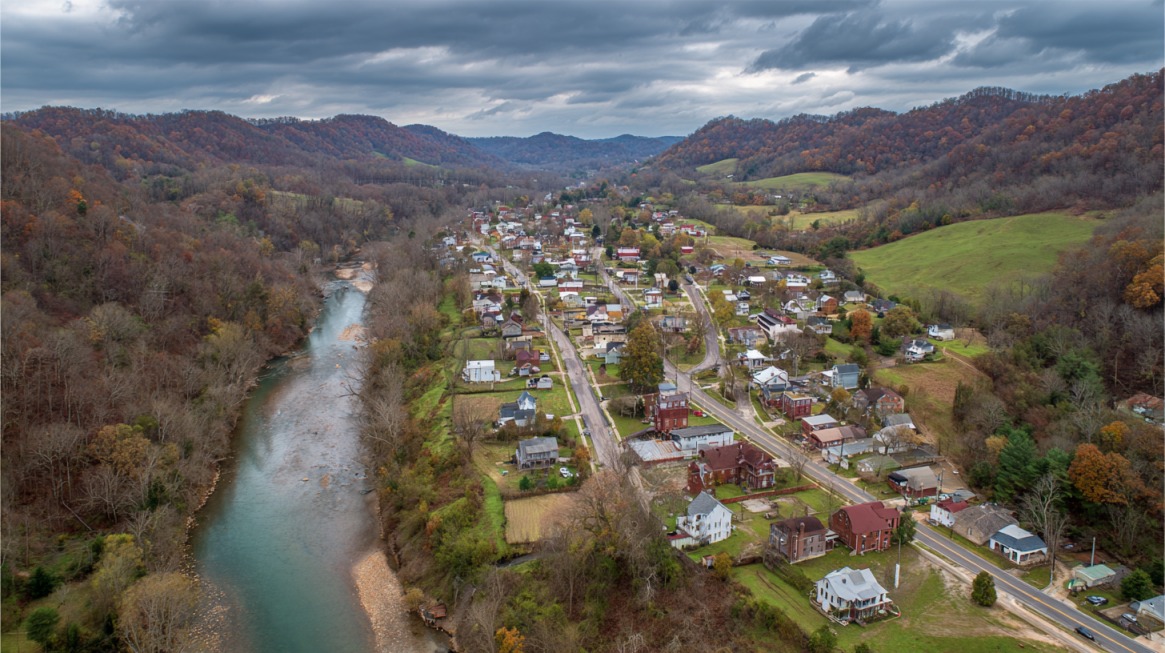
Southern Ohio includes historic industrial centers, rural river towns, and expanding suburban communities.
Population patterns across the region show clear shifts tied to housing costs, commuting access, and redevelopment efforts.
Data covering 2017–2021 and 2020–2025 reveals which cities maintain size, which remain small, and which are adding residents at notable rates.
Gaining an insight into trends like this one makes it possible to grasp demographic change, housing demand, and economic direction across Southern Ohio.
Some people may find it interesting to find a new home in one of these. Why not?
| City | Population | Annual Growth Rate | Economic Drivers |
| Cincinnati | 316,242 | +0.42% | Corporate headquarters, healthcare, education |
| Dayton | 136,044 | -0.22% | Defense, aerospace, federal employment |
| Hamilton | 64,086 | +1% | Arts, redevelopment, regional access |
| Middletown | 52,608 | +4% | Reinvestment, affordability, location |
| Beavercreek | 48,362 | +0.73% | Suburban employment access, education |
1. Cincinnati – 316,242
Cincinnati ranks as Ohio’s third-largest city and operates as a primary economic engine within Southern Ohio.
Annual growth averages +0.42%, indicating long-term population stability rather than rapid expansion.
Employment strength comes largely through corporate, healthcare, and education sectors, which anchor the metro economy even during slower growth cycles.
- Kroger headquarters employs thousands across corporate operations
- Procter and Gamble is maintaining global executive and research functions
- The University of Cincinnati supports education, medical research, and a large healthcare workforce
River access along the Ohio River supports logistics, recreation, and redevelopment initiatives.
Professional sports franchises and dense urban neighborhoods contribute to sustained residential demand, especially in revitalized districts close to downtown.
2. Dayton – 136,044
View this post on Instagram
Dayton reports a slight population decline of -0.22% between 2020 and 2025.
Population change remains closely tied to federal employment cycles and regional redevelopment efforts.
Economic stability relies heavily on defense and aerospace industries centered around Wright-Patterson Air Force Base.
- Aerospace research and development
- Defense contracting and engineering
- Federal civilian and military employment
Aviation history continues to shape civic identity, reinforced through museums, research institutions, and branding initiatives.
Downtown areas show ongoing housing development, mixed-use construction, and adaptive reuse projects intended to attract residents back into the urban core.
3. Hamilton – 64,086
Hamilton functions as a smaller city experiencing renewed momentum north of Cincinnati.
Redfin reports a 1% population increase between 2017 and 2021, signaling a shift after decades of stagnation.
Growth patterns reflect reinvestment rather than suburban sprawl.
- Expansion of arts programming and public events
- Continued development around Pyramid Hill Sculpture Park
- Restoration of historic buildings for residential and commercial use
Housing affordability relative to nearby Cincinnati draws residents seeking lower costs without losing metro access.
Downtown improvements and infrastructure upgrades further support population gains.
4. Middletown – 52,608
Middletown leads growth among Ohio cities with populations above 50,000.
Redfin identifies a +4% population increase between 2017 and 2021, placing Middletown at the top of its peer group.
Growth stems largely from reinvestment and pricing advantages.
- Median home prices are around $150,000
- Central location between Cincinnati and Dayton
- Revitalized downtown corridors supporting retail and housing
Community reinvestment has improved walkability, storefront occupancy, and housing rehabilitation.
New residents often arrive seeking affordability paired with access to two major metro job markets.
5. Beavercreek – 48,362
Beavercreek records +0.73% annual growth and maintains a strong suburban profile within the Dayton metro area.
Population increases align closely with employment access and family-oriented development patterns.
City amenities strengthen residential demand, especially among households prioritizing schools and outdoor space.
- 23 public parks are distributed across residential neighborhoods
- Highly rated public school systems
- Close proximity to Wright-Patterson Air Force Base
Residential construction continues as families seek suburban housing with stable employment nearby.
Growth remains steady rather than rapid, reinforcing Beavercreek’s reputation as a consistent suburban option.
Smallest Cities in Southern Ohio
Several towns record populations under 2,500 residents, reflecting strong rural character, limited housing supply, and narrow economic bases.
Community identity in these places often centers on local government, agriculture, and long-standing regional history rather than rapid growth.

1. Manchester – 1,862 (Adams County)
Manchester sits along the Ohio River near the Kentucky border and developed historically around agriculture and river-based trade.
Farming, small manufacturing, and local services continue to support employment.
Residential construction remains limited, and housing stock consists largely of older single-family homes.
Population levels show little fluctuation as younger residents often relocate for education or broader job opportunities.
2. Batavia – 2,036 (Clermont County)
Batavia functions as the administrative center of Clermont County despite its small population.
Government offices, courts, and public services provide stable employment.
Surrounding rural land and zoning limitations restrict large-scale residential development.
Proximity to growing suburban areas has not translated into major population gains, as Batavia retains a quieter, civic-focused character.
3. Piketon – 2,183 (Pike County)
Piketon developed around industrial and federal facilities, particularly energy-related operations.
Employment opportunities declined after earlier industrial contractions, leading to population loss over several decades.
Recent stabilization suggests decline has slowed, yet housing demand and private investment remain limited.
Local schools and small businesses continue to serve residents who maintain long-term ties to the area.
4. Ripley – 1,594 (Brown County)
Ripley holds a strong historical identity tied to Ohio River commerce and early abolitionist activity.
Riverfront location once supported trade and transportation, though modern economic activity remains narrow.
Small businesses, tourism related to local history, and agriculture provide modest employment.
The population remains low as limited job variety restricts new resident inflow.
5. Georgetown – 4,508 (Brown County)
Georgetown exceeds the smallest-city population threshold but remains small relative to regional centers.
County seat status supports government employment, legal services, and healthcare facilities.
Local schools, retail, and public offices form the backbone of the economy.
Population size remains steady rather than expanding, with growth constrained by regional employment opportunities and limited suburban spillover.
Rural economies across these towns depend heavily on agriculture, local government, and small-scale commerce. Population trends show stability or gradual decline rather than expansion.
Fastest-Growing Cities in Southern Ohio
| City | County | Population | Annual Growth Rate |
|---|---|---|---|
| South Bloomfield | Pickaway County | 4,146 | 10.65% |
| Maineville | Warren County | 1,542 | 1.65% |
| South Lebanon | Warren County | 7,037 | 1.65% |
| Ashville | Pickaway County | 4,809 | 1.07% |
| Circleville | Pickaway County | 14,553 | 0.83% |
| Lebanon | Warren County | 22,274 | 1.27% |
Rapid population increases appear most often in suburban communities near Columbus and Cincinnati.
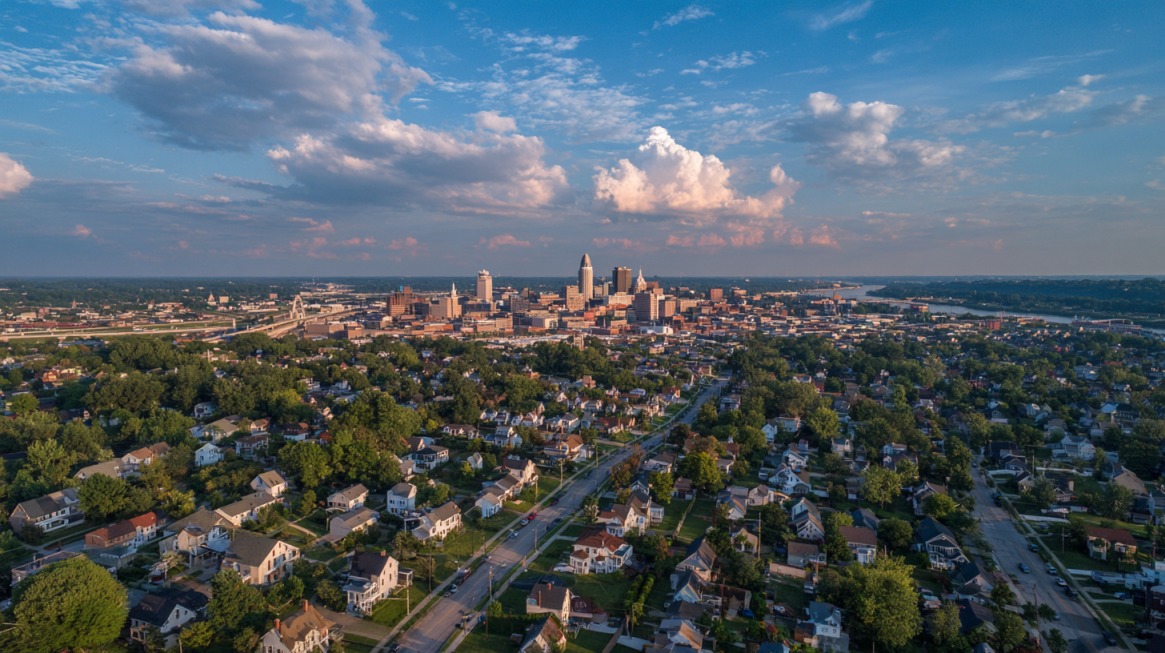
South Bloomfield (Pickaway County)
South Bloomfield leads Southern Ohio growth rates with a 10.65% annual increase and a population of 4,005.
Residential construction has accelerated due to direct highway access and proximity to Columbus employment centers.
New subdivisions and commercial services continue to attract first-time buyers and young families.
Maineville (Warren County)
Maineville posts 1.65% annual growth with 1,542 residents.
Location near Interstate corridors and Cincinnati employment hubs supports commuter demand.
Limited commercial development keeps the community primarily residential, which appeals to buyers seeking quieter living with metro access.
South Lebanon (Warren County)
South Lebanon matches Maineville with 1.65% annual growth and a population of 7,037.
New housing developments and access to established school districts fuel population increases.
Infrastructure improvements and retail additions reinforce steady residential expansion.
Ashville (Pickaway County)
Ashville grows at a 1.07% annual rate and holds 4,809 residents.
Close proximity to Columbus allows residents to access city employment while maintaining lower housing costs.
Expansion remains focused on single-family housing and local service businesses.
Circleville (Pickaway County)
Circleville records 0.83% annual growth with a population of 14,553.
Manufacturing, healthcare, and retail provide employment stability.
City scale supports gradual residential additions rather than rapid suburban sprawl.
Lebanon (Warren County)
Lebanon posts 1.27% annual growth and a population of 22,274.
Downtown reinvestment supports retail and dining activity, while surrounding suburban development expands housing options.
Historic character paired with modern infrastructure strengthens residential interest.
Growth Patterns Based on 2017–2021 Data
- Middletown grows by +4% with a population near 51,000.
- Kettering records +4% growth and holds roughly 57,400 residents.
- Cincinnati shows +2% growth with a population near 308,950.
- Hamilton posts +1% growth with approximately 62,950 residents.
Results show increasing interest in mid-sized cities that offer affordability, revitalized downtowns, and access to major metro areas.

Analysis and Regional Trends
Suburban expansion drives much of Southern Ohio’s population growth as households seek lower housing costs and improved space options.
Communities located near Columbus and Cincinnati attract residents priced out of urban cores while remaining within reasonable commuting distance.
Warren and Pickaway counties emerge as primary development zones due to highway connectivity, land availability, and sustained residential construction.
- South Bloomfield posts a 10.65% annual growth rate, the highest in the region
- Maineville and South Lebanon each maintain 1.65% annual growth
- Ashville and Circleville continue steady expansion tied to Columbus-area access
Mid-sized city revitalization also shapes growth patterns across Southern Ohio.
Cities such as Middletown and Hamilton benefit from targeted downtown reinvestment, arts programming, and housing rehabilitation initiatives.
- Middletown records a 4% increase between 2017 and 2021
- Hamilton posts a 1% population gain over the same period
- Kettering also reaches 4% growth, reinforcing broader regional recovery trends
Affordability remains a central factor influencing both relocation and investment decisions.
Lower housing costs relative to major metro areas continue to draw residents seeking long-term stability.
View this post on Instagram
- Median home prices in Middletown near $150,000
- Average rent for a two-bedroom apartment around $825
Housing accessibility, combined with infrastructure investment and employment proximity, continues to shape population shifts across Southern Ohio.
Summary
Southern Ohio shows clear movement away from long-term industrial decline toward suburban expansion and selective urban renewal.
Smaller towns remain stable or shrinking, while suburban communities and revitalized mid-sized cities gain residents.
Population data points to affordability, commuting access, and redevelopment as primary drivers shaping future growth across the region.
References
- Redfin – The 9 Fastest-Growing Cities in Ohio
- WorldPopulationReview – Fastest Growing Cities in Ohio
- Lisc – Housing Affordability in Hamilton County
- Ohio Demographics – South Bloomfield Demographic Statistics
- Beavecreek Ohio – Beavercreek City Council Proposes Park Levy to Develop Spring House Park and Maintain City Parks