
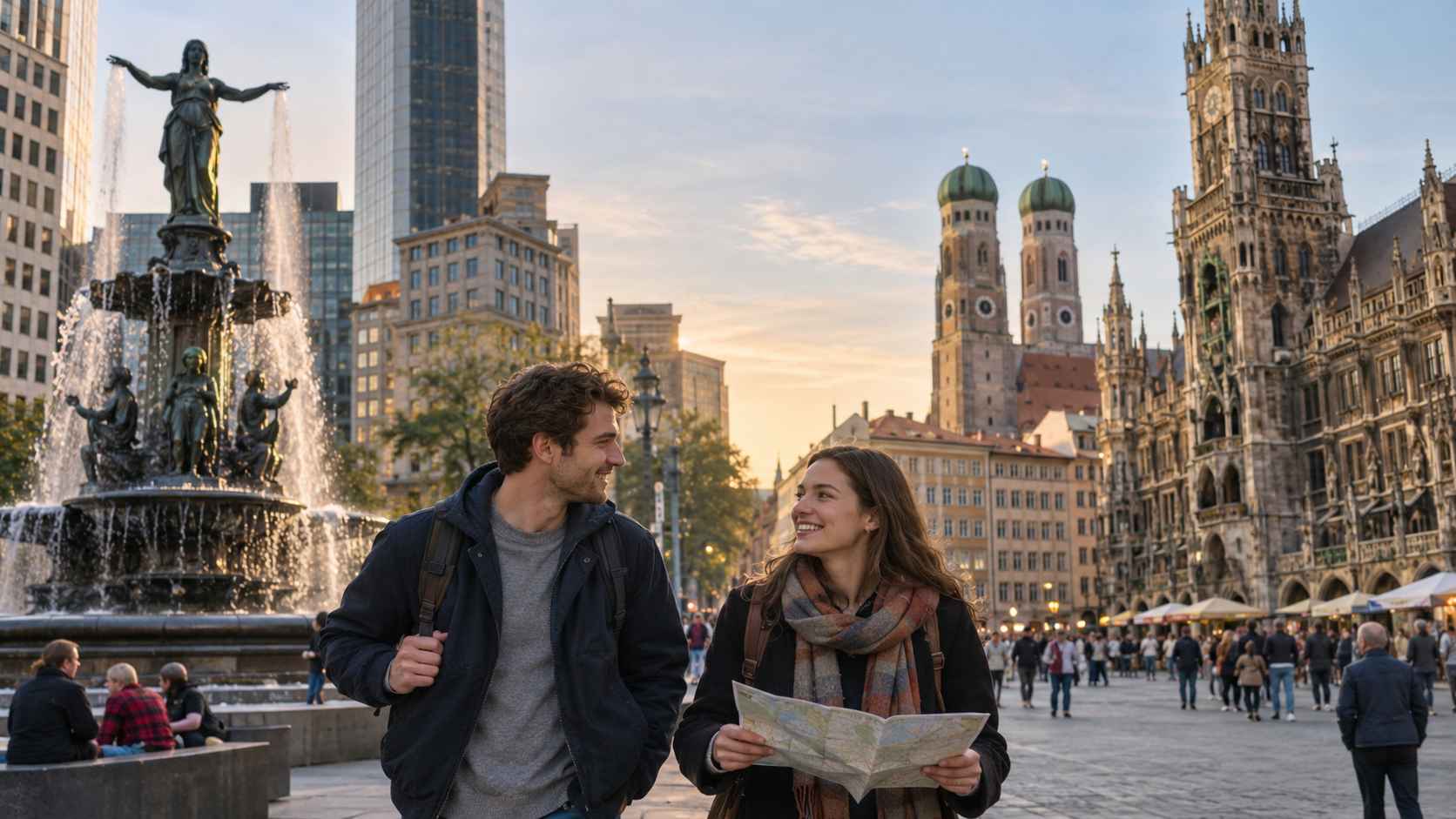
Cincinnati and Munich have been official sister cities since September 18, 1989. The partnership began with a shared German heritage, years of personal connections, and an agreement between two mayors who wanted their communities to work together across the Atlantic.
More than 37 years later, the relationship remains active. Students travel between Ohio and Bavaria, cultural organizations organize exchanges, and Munich officials participate in Cincinnati’s Oktoberfest celebrations. The connection is especially interesting because the two cities had close ties long before anyone signed an official agreement.
Cincinnati has one of the most recognizable German-American cultural identities in the United States. Munich, the Bavarian capital, is associated with many traditions that German immigrants brought to Ohio, including brewing, music, and community festivals.
The sister city partnership gave those historical connections a formal structure, allowing residents, schools, businesses, and public institutions to maintain contact across generations.
How Cincinnati and Munich Became Sister Cities in 1989
The relationship between Cincinnati and Munich goes back much further than the official partnership. German immigrants began arriving in Cincinnati during the late 18th century, and their influence helped shape the city’s neighborhoods, religious institutions, businesses, and cultural traditions.
By 1900, more than 40 percent of Cincinnati’s population had German roots, according to the historical account maintained by the Munich Sister City Association of Greater Cincinnati.
For a modern perspective, Cincinnati population statistics provide a closer look at the city’s demographic makeup today.
One physical reminder of the connection stands in downtown Cincinnati. The Tyler Davidson Fountain, installed in Fountain Square in 1871, was cast in Munich. It remains one of Cincinnati’s best-known landmarks.
The relationship also worked in the opposite direction. After World War II, members of Cincinnati’s German-American community contributed money toward restoring historic buildings in Munich, including Frauenkirche and St. Peter’s Church.
The First Attempt Happened in 1951
Cincinnati officials began discussing a formal relationship with Munich in 1951. Mayor Albert D. Cash contacted Munich Mayor Thomas Wimmer after a local committee selected Munich as a suitable European partner.
Munich welcomed the proposal, and both cities established committees. However, the early effort did not develop into a lasting formal partnership.
Communication continued through occasional exchanges. In 1953 and 1954, Cincinnati and Munich organized transatlantic radio broadcasts involving municipal officials, helping residents hear directly from representatives of the other city.
The project gained new momentum during the 1980s, particularly through Auguste Kent, a Munich-born educator who lived in the Cincinnati area.
Kent played a major part in rebuilding the relationship. A Cincinnati-Munich Sister City Committee formed in 1984, bringing together people from local businesses, German-American organizations, and educational institutions.
The Official Agreement Was Signed in Two Cities
In July 1989, Munich Mayor Georg Kronawitter visited Cincinnati with a delegation of municipal representatives. They met local officials, business leaders, and members of the German-American community.
The official sister city agreement was signed in Munich on September 18, 1989, by Kronawitter and Cincinnati Mayor Charles Luken.
A second signing ceremony took place in Cincinnati on June 6, 1990. The two ceremonies established a lasting partnership intended to encourage cooperation and exchanges between the communities.
The City of Munich’s official partnership history confirms the 1989 agreement and describes the continuing economic and cultural connections between the cities.
The original agreement did not establish an expiration date. Cincinnati and Munich committed themselves to maintaining the relationship and supporting future cooperation.
German Heritage Made Cincinnati a Natural Partner for Munich
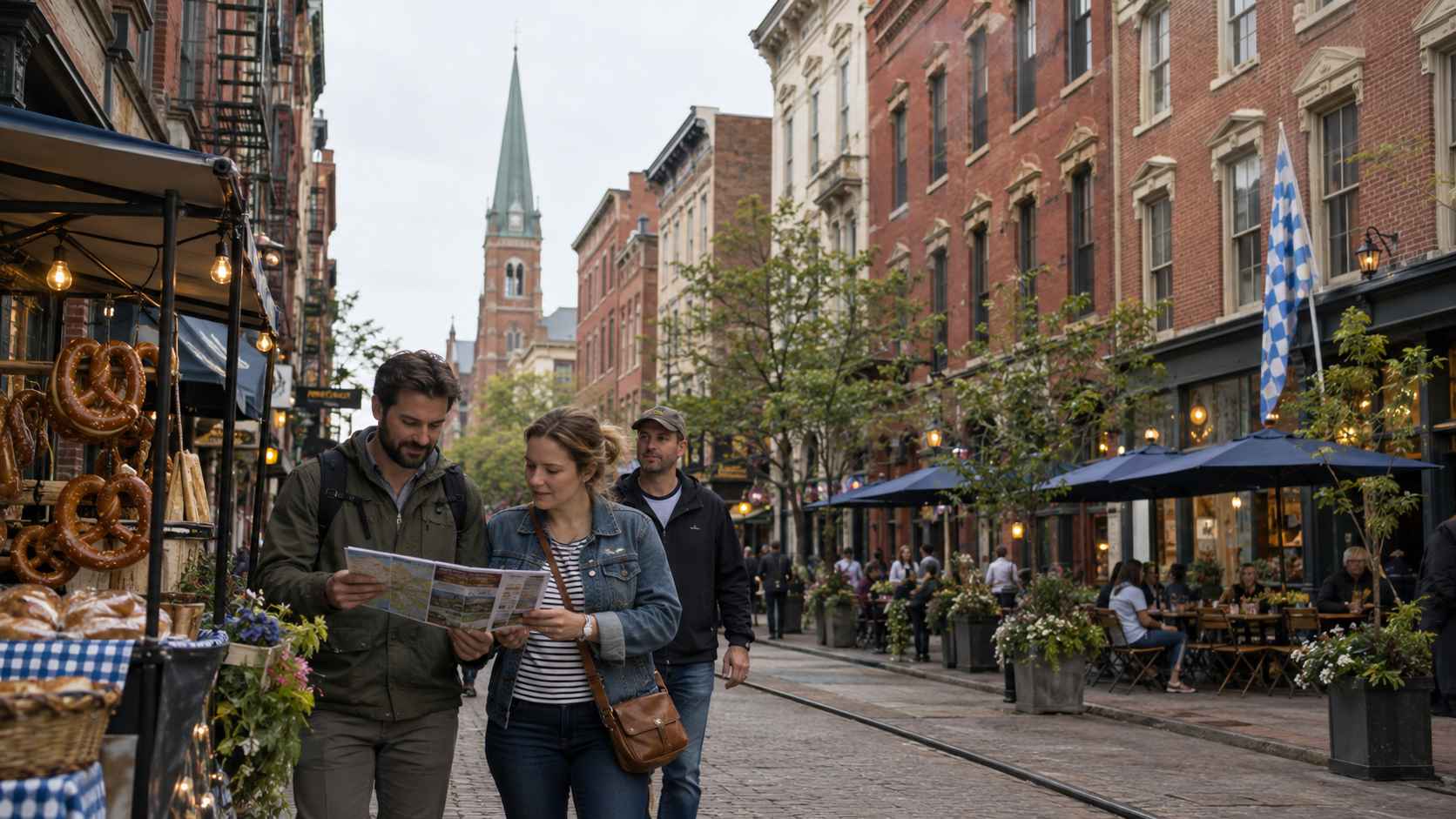
Cincinnati’s German heritage remains visible in its architecture, churches, neighborhoods, and festivals. Thousands of German immigrants settled in the city during the 19th century, establishing businesses and community organizations that influenced local life.
This history is part of the broader Ohio and Germany connection, which shaped communities throughout the state.
Over-the-Rhine is among the clearest examples. The neighborhood developed as an important center of German-American life and became closely associated with Cincinnati’s brewing industry.
Many buildings from the period remain, including historic churches, commercial properties, and residential structures.
The neighborhood’s name also recalls the Rhine River, one of Germany’s major waterways. German immigrants used the name for the area north of Cincinnati’s former Miami and Erie Canal, drawing a connection between their new surroundings and their homeland.
Oktoberfest Zinzinnati Keeps the Cultural Connection Visible
Oktoberfest Zinzinnati is one of Cincinnati’s most recognizable annual celebrations. The festival brings German food, music, traditional clothing, and beer culture into the heart of the city.
Although Munich’s Oktoberfest takes place on a much larger scale, Cincinnati has developed its own version with a distinctly local character.
The relationship between the festivals extends to official participation. Munich representatives have visited Cincinnati for Oktoberfest celebrations, helping maintain the personal connections behind the sister city agreement.
German brass bands have also traveled to Cincinnati for performances. The Munich Sister City Association records visits by Bavarian musicians dating back to the 1980s, including performances at schools, churches, and community events.
Those visits gave Cincinnati residents direct contact with Bavarian traditions rather than limiting the connection to symbolic ceremonies.
View this post on Instagram
Education Became Another Important Part of the Partnership
Student and teacher exchanges began developing soon after the formal agreement. Cincinnati educators traveled to Munich, and German teachers and students visited Ohio.
The early programs included visits to schools and opportunities for participants to experience daily life in another country.
Educational cooperation helped extend the relationship to younger generations who had no personal connection to the immigration history of the 19th century.
For students, the exchange offered something that classroom lessons alone could not provide. Living with host families, attending local activities, and speaking with residents gave participants direct experience of another culture.
How Connected Are Cincinnati and Munich Today?
@felifromgermanyDid you know that Munich 🇩🇪 and Cincinnati 🇺🇸 are sister cities? Check out my YouTube channel (link in bio) for the full video and if you’re from Cincinnati and want to participate in the 2026 high school exchange, go to MunichCincinnati.org for more details and apply by January 31!♬ original sound – Feli from Germany
The partnership continues through the Munich Sister City Association of Greater Cincinnati, a volunteer organization that supports educational, cultural, business, and community exchanges.
Its work includes maintaining contacts between residents and helping organize visits between Ohio and Bavaria.
The relationship is particularly active through student exchanges. According to the association’s official educational exchange information, Cincinnati students traveled to Munich from July 18 to 31, 2026, with Munich students visiting Cincinnati from September 5 to 19.
The program has operated since 1995, giving students from the Cincinnati area opportunities to experience life in Germany.
During their visits, participants can spend time with host families and join organized activities. The program also gives students a chance to develop international friendships that may continue after they return home.
The association’s work extends into cultural activities and community events. Its volunteers help keep the historical relationship active even when municipal leadership changes.
Traveling From Cincinnati to Munich
Modern air travel makes it possible for Cincinnati residents to experience Munich without the long journeys that earlier generations of immigrants faced.
Travelers depart from Cincinnati/Northern Kentucky International Airport (CVG) and arrive at Munich Airport (MUC).
As of October 2026, there are no regularly scheduled nonstop flights between Cincinnati and Munich. Travelers generally connect through another airport, with possible routes through Washington, Chicago, Newark, Toronto, or other major hubs.
Available connections and schedules change by airline and season. The Cincinnati to Munich flight overview provides examples of available connections.
For American travelers visiting Germany for a short tourist trip, Munich is a convenient starting point for exploring Bavaria. The airport has rail connections to the city center, and Munich’s public transportation network makes many attractions accessible without renting a car.
Late spring and early autumn are appealing periods for sightseeing. September is particularly interesting for visitors who want to experience the original Oktoberfest, although hotel prices and demand rise during the festival.
The Biggest Attractions to Visit in Munich
Travelers from Cincinnati will recognize some familiar German-American traditions in Munich, especially around its beer halls and festivals. However, the Bavarian capital has far more to offer than Oktoberfest.
Its historic center, major museums, public parks, and contemporary entertainment districts make it suitable for a visit lasting several days.
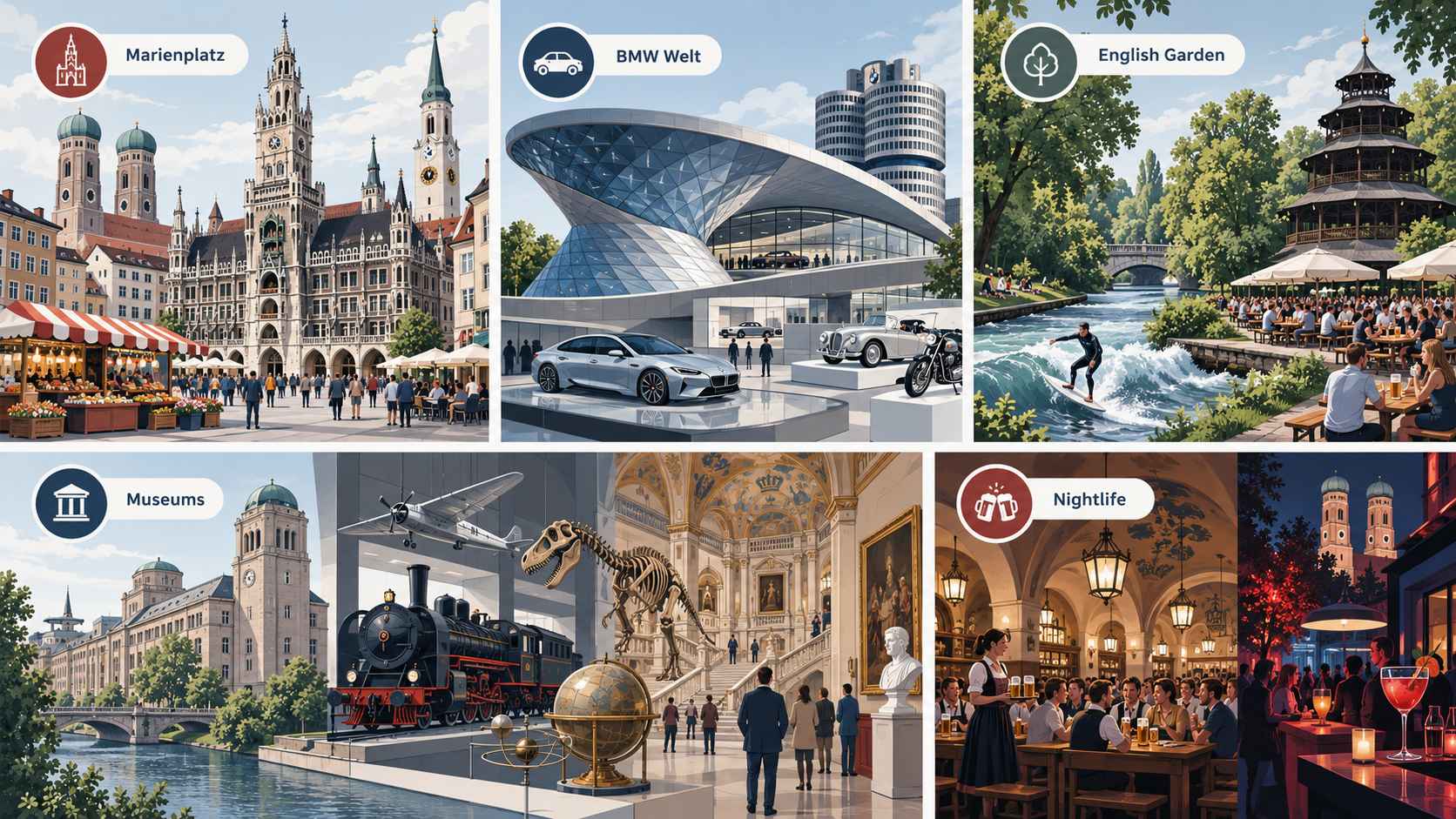
Marienplatz and the Historic Old Town
Marienplatz is the central square of Munich and one of the most convenient starting points for exploring the city.
The square is dominated by the Neues Rathaus, an elaborate Gothic Revival building that houses municipal offices. Its famous Glockenspiel attracts visitors who gather to watch mechanical figures perform at scheduled times.
From Marienplatz, visitors can walk to Frauenkirche, St. Peter’s Church, and Viktualienmarkt, a traditional food market with stalls selling regional products.
The official Marienplatz visitor guide provides information about the square and surrounding landmarks.
For Cincinnati residents interested in the sister city connection, the historic center offers an opportunity to see buildings and public spaces associated with the early exchanges between the cities.
BMW Welt and BMW Museum
Munich is home to BMW, and the company’s headquarters are located beside Olympiapark.
BMW Welt is a modern exhibition and delivery center where visitors can see vehicles and explore displays associated with the manufacturer. Its architecture is also an attraction, particularly the dramatic double-cone structure at the entrance.
The nearby BMW Museum concentrates on the history of the brand, including its early engineering work, motorcycles, historic cars, and motorsport achievements.
Car enthusiasts can easily spend several hours exploring both attractions. The complex is accessible by taking the U3 underground line to Olympiazentrum.
View this post on Instagram
English Garden and Traditional Beer Gardens
The English Garden is one of Munich’s best-known public parks. Its extensive paths, lawns, and wooded areas provide a convenient escape from the busy streets.
Visitors can see the Eisbach wave, where experienced surfers ride a standing river wave when access is permitted, or walk toward the Chinese Tower beer garden.
The park is particularly enjoyable during warmer months, when residents gather outdoors and spend time along the waterways.
Traditional beer gardens are an important part of Munich’s social culture. For visitors from Cincinnati, they provide an interesting comparison with the German-American beer traditions found at home.
Deutsches Museum and Munich’s Cultural Attractions
Farbfeuerwerk für Minis: Bei einem interaktiven Workshop am 5. und 6. Januar (10 bis 15:30 Uhr) können Kinder mit einer Salatschleuder farbenfrohe Kunstwerke erzeugen und dabei lernen, wie die Rotation Muster beeinflusst. Mehr Infos: https://t.co/sW7P3exiTt
📸 Andrea Koplitz https://t.co/gMC67C8831
— Deutsches Museum (@DeutschesMuseum) January 5, 2026
Munich has several major museums covering science, technology, history, and fine art.
The Deutsches Museum is especially interesting for visitors who enjoy engineering and scientific discoveries. Its exhibitions explain developments in fields including aviation, electronics, and industrial technology.
The Alte Pinakothek contains works by major European painters, while the Munich Residenz provides a look at the former royal palace of Bavaria.
Travelers interested in transportation can also visit the Deutsches Museum Verkehrszentrum, which focuses on the development of automobiles, railways, and other forms of mobility.
Munich Nightlife and Entertainment
Munich nightlife extends from traditional beer halls to modern cocktail bars and nightclubs. Glockenbachviertel and Gärtnerplatz are popular areas for an evening out, while other neighborhoods offer live music, restaurants, and late-night entertainment.
Travelers visiting alone who would prefer some personal company for the evening can also check out Louisa.
The Bottom Line
The Cincinnati-Munich relationship has lasted because it grew from existing community connections rather than beginning solely as a diplomatic gesture.
German-American organizations, educators, business leaders, musicians, and volunteers were involved long before the official signing. Their participation helped establish programs that could continue independently of individual mayors or city administrations.
Auguste Kent and other early organizers played an important part in bringing the agreement to life. Later generations of volunteers continued that work through student exchanges and cultural activities.
The dates themselves tell an interesting story. Cincinnati first approached Munich about a formal relationship in 1951. The agreement was finally signed in Germany on September 18, 1989, and confirmed in Cincinnati on June 6, 1990.
More than three decades later, students are still crossing the Atlantic through the partnership, and Munich remains an official sister city of Cincinnati.